









MODLR helps logistics companies improve planning, forecasting, and profitability using real-time data, scenario modelling, and integrated analytics. This Q&A with founder Ben Hill explains how MODLR addresses key logistics challenges such as visibility, automation, and cost optimisation.
Here’s what we asked Ben:
- Introduction
- Why does MODLR focus on the logistics sector right now?
- How can MODLR help logistics firms currently grappling with disruptive challenges?
- What subsectors of the logistics industry can benefit from MODLR solutions?
- How does MODLR support logistics firms deal with the many challenges they are facing right now?
- What is Dimensional Profitability Modelling?
- Conclusion
Introduction
In this article MODLR founder Ben Hill responds to many FAQs and explains how MODLR can help logistics companies deal with their planning and forecasting challenges. Logistics firms need better visibility and data-driven decision-making to adapt to the rapid changes happening in the sector due to digitalisation, automation, AI, sustainability pressures, and complex global supply chains. According to Ben, MODLR addresses their needs by integrating operational and financial data into a single planning model and enabling real-time forecasting, scenario analysis, and advanced analytics. MODLR platform supports a wide range of logistics businesses-from global providers and 3PLs to freight forwarders-by helping them improve their profitability, optimise operations, and by enabling them respond faster to operational issues and disruptive trends that affect the logistics industry. Read on to find out how.
Q: Why does MODLR focus on the logistics sector right now?
Ben: At MODLR, our goal is to help businesses improve their planning, forecasting, and decision-making in a faster and more cost-effective way. Our industry solutions are often driven by client needs. A company would ask us to find a solution to a specific problem they face. Then, we take the time to understand how that sector operates and then build our tailored solution for that client.
We have tailor-made solutions for a number of industry sectors. Logistics is one we work in most consistently.
As for why now, it is because the modern logistics sector is complex and is currently undergoing rapid change. The sector relies quite heavily on logistics planning, supply chain visibility, and data-driven decision-making. This makes the logistics sector a strong fit for MODLR’s planning and forecasting platform and the solutions we offer.
The global logistics industry keeps international trade moving. They carry raw materials, components, and finished products across borders through transport, warehousing, customs, and last-mile delivery. It plays a huge role in the economic growth of countries. The needs of logistics firms today are fueled by a combination of globalisation, e-commerce, complex supply chains and advances in technology.
Big players in logistics-like Fedex, DHL, Maersk, UPS and Amazon-are running massive networks that support everything from retail to healthcare. Access to modern technology is helping small and mid-sized firms level that playing field. These facts alone are enough justification for MODLR to focus on the logistics sector.
Q: How can MODLR help logistics firms currently grappling with disruptive challenges?
Ben: Yes, today the logistics sector is being reshaped by digitalisation, automation, data-driven planning, and a range of sustainability requirements. There’s also growing pressure for end-to-end visibility and resilience across supply chains.
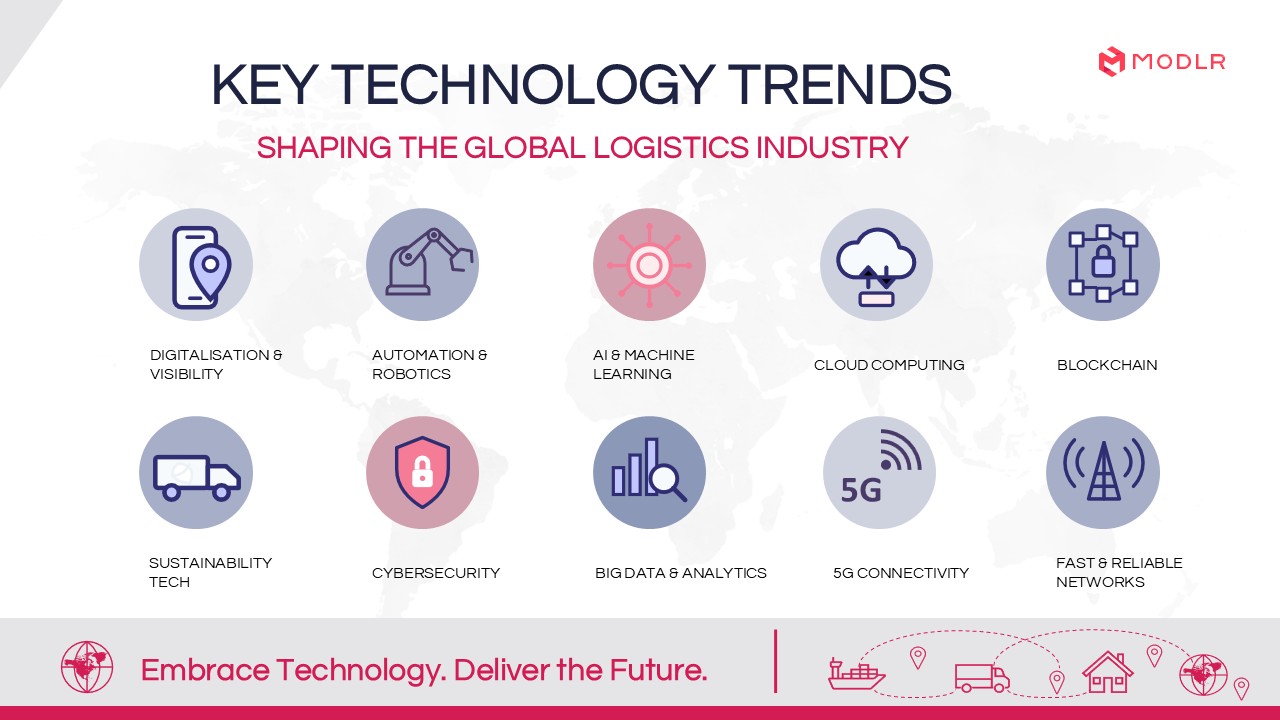
These trends have been gradually moving forward for years. But, recent disruptions-such as geopolitical instability and climate risks-have made them more urgent. As a result, logistics is no longer just operational; it’s now become a strategic function. Today companies view logistics to be a strategic capability because it has a direct impact on their costs, service levels, competitiveness and profitability. So this is certainly a good time for us to get involved with the sector.
MODLR helps logistics businesses by enabling integrated planning, real-time forecasting, and scenario modelling, among other solutions. We give them the tools to respond quickly to evolving situations and to make better informed decisions. All this helps streamline operations and optimise profits.
Q: What subsectors of the logistics industry can benefit from MODLR solutions?
Ben: When we refer to the logistics sector, we are talking about an ecosystem made up of a wide range of businesses with large, mid-sized and small firms. The subsectors of the logistics ecosystem include:
- Integrated global logistics providers (end-to-end)
- Ocean freight and shipping lines
- Air freight and express carriers
- Freight forwarders
- Third-party logistics providers (3PLs)
- Fourth-party logistics providers (4PLs / lead logistics)
- Last-mile and e-commerce fulfilment providers
- Logistics technology and platform providers
Different types of firms face different pressures. They may operate differently, but they all share a need for better planning, visibility, and profitability insights.
MODLR adapts to each business model by supporting multi-dimensional planning and analytics. This allows teams to analyse their performance by customer, route, service, or region; whatever matters most to their operations.
Q: How does MODLR support logistics firms deal with the many challenges they are facing right now?
Ben: Let us take logistics industry challenges one by one so I can explain their impact and how MODLR can help. I’ll talk about:
- Digitalisation and visibility
- Automation and robotics
- AI and machine learning
- Cloud integration and connectivity
- Advanced analytics and big data
- Sustainability tech
- Cyber security
- Faster connectivity and
- Augmented reality (AR) and wearables
I will then explain how we support each area with customisable MODLR features and solutions.
Q: How does MODLR improve digitalisation and visibility for logistics firms?
Ben: If you look, you’lll see that logistics data in your business lives everywhere-you find it in transportation management systems (TMS), warehouse management systems (WMS), Enterprise Resource Planning systems (ERPs), internet of things (IoT) platforms, and in plenty of spreadsheets. When data is fragmented in this way, it is hard for a business to get a clear view of their performance.
MODLR solves this by integrating financial and operational data-that may be spread throughout diverse systems and across the world-into a single, connected planning and reporting model. This gives logistics firms real-time visibility across their entire supply chain.
Logistics teams and top management teams are then able to:
- Identify issues early rather than look in the rear view mirror;
- Align their plans across regions and business units spread across the globe; and
- Run scenario modelling to test and finetune their decisions
Such a unified view is especially valuable for large, global logistics providers that must manage complex networks.
Q: How can we learn more about these solutions?
Ben:You can check out these MODLR solutions for more information:
- Our Management Reporting Solution helps bring data together from multiple systems so that logistics teams get a unified, real-time view of performance rather than fragmented info from spreadsheets.
- Rolling Forecasts help to keep your plans live and updated as new data flows in. They support more responsive decisions.
- Also make sure to visit our integrations page for more information on the 50 plus integrations MODLR offers to make your processes run smoothly.
- Dimensional Profitability Modelling helps logistics businesses analyse profitability by customer, route, service, warehouse, or region, providing deeper insight into what is driving profit and where opportunities exist to improve margins and operational performance.
Q: How does MODLR support automation and robotics investment decisions?
Ben: Investments in automation and robotics don’t benefit all logistics firms in the same way. They deliver the biggest impact for businesses with high-volume, repetitive logistics operations, as you will find in warehousing, fulfilment, and sorting.
However, automation also generates large volumes of data, which can be difficult to interpret. MODLR connects operational metrics with financial and capacity models, helping businesses understand:
- The true cost of automation
- Its impact on throughput and labour
- Whether investments are delivering expected returns
With tools like scenario planningand value driver analysis, teams can test automation strategies before committing.
Q: What type of logistics firms benefit the most from robotics and automation?
Ben: Integrated logistics providers, 3PLs, last-mile and e-commerce fulfillment providers and air freight and express carriers benefit the most from automation and robotics.
- Integrated global logistics providers that offer end-to-end solutions have large warehouses, hubs, and transport networks where automation can help at scale. Robotics improves picking, sorting, and cross-docking. Automation helps reduce labour dependency and improves consistency across operational regions.
- 3PLs are probably the biggest winners in regard to automation and robotics because warehousing and fulfillment are their core business. Robotics can speed up picking and packing and improve accuracy. Robotics can also help them deal with fluctuating volumes without constantly having to add more people to their workforce.
- Last-mile and e-commerce fulfilment providers face high order volumes and tight delivery windows, making automation essential. Automated sorting, routing, and micro-fulfilment robots can help them manage peak demand, reducing delivery times, and keeping unit costs within control.
- For air freight and express carriers, automation may be critical in their hubs and sorting facilities, where speed is everything. Robotics and automated sorters can reduce bottlenecks, improve on-time performance, and help manage volume spikes in peak seasons and periods.
Q: What are the MODLR solutions related to automation?
Ben: Our Scenario Planning and Value Driver Trees solutions are directly related.
- MODLR’s Scenario Planning solution lets teams run “what-if” scenarios around automation impact as well as throughput, and costs. This helps you test how automation investments pay off in your business.
- Value Driver Trees is a solution that can help you identify which automation drivers actually move costs and outcomes the most for your business.
Q: What MODLR articles address automation topics?
Ben: When we say automation at MODLR, we are not just talking about automating physical processes. We are also talking about automating data integration, analysis, reporting and consolidation processes.
We have published a series of articles on automation related topics in the MODLR website:
- Back to Basics: Why Do Companies Automate Their Operations?
- How to Build an Effective Business Case for Automation (Back to Basics Part 2)
- How to Apply Metrics to Automation Projects (Back to Basics Part 3)
- How to Effectively Deal with Risks & Challenges in Automation Projects (Back to Basics Part 4)
- How to Make a Timeline for Automation with Milestones (Back to Basics Part 5)
- Thriving in a Downturn: Automating Finance Operations for Efficiency
Check these out and give us some feedback.
Q: Where does AI and machine learning deliver the most value for logistics firms?
Ben: AI and machine learning are most effective in businesses that already have high data volumes, repeatable decisions, and clear operational pain points-particularly freight forwarders, 3PLs, and last-mile providers.
- Freight forwarders already have pricing, shipment, and lane data but many of their processes are still manual or spreadsheet-driven. The decisions they must take-on quotes, routing, carrier selection-they need to repeat daily. They don’t need robots, or warehouses for this; just better use of their existing data and systems to find easy AI wins in:
- Automated quoting and rate prediction
- Exception detection such as for late shipments and cost overruns
- Margin analysis by customer or lane
- 3PLshigh data volumes and are constantly facing clear cost and capacity pressure and both labour and space are expensive. Most 3PLs already collect data in their WMS and TMS. AI will simply connect and analyse it better. They can find easy AI wins with:
- Demand and volume forecasting
- Labour and shift optimisation; and
- Inventory placement recommendations
- Last-mile & e-commerce fulfilment providers face onstant pressure from peak demand and delivery Service Level Agreements (SLAs). Their routing and scheduling decisions are highly repeatable. They can find easy AI wins in route optimisation, estimated time of arrival (ETA) predictions and peak demand forecasting because algorithms can be layered onto their existing routing and dispatch systems.
MODLR provides a collaborative planning layer where teams can combine AI-driven insights with human decision-making, ensuring forecasts align with operational and financial plans. They can become much more efficient and productive this way.
Q: How to learn more about MODLR solutions?
Ben: You can check these articles that explain their application in the real world:
- Scenario Planning solution. While not AI itself, the ability to explore what-if scenarios lets teams analyse outcomes that are based on machine-generated forecasts or ML insights.
- Variance Analysis helps you compare predicted figures against actual results, and helps you turn the resulting advanced insights into actionable plans.
- Navigating Business Uncertainty with Scenario Planning and Alternate Strategies
- Month-End Variance Analysis
Q: How does MODLR help with cloud integration and data connectivity?
Ben: For many logistics businesses, moving systems to the cloud can feel like a big leap. There are concerns about data accuracy, system downtime, and keeping multiple platforms-like TMS, WMS, and ERPs-in sync while everything is changing.
MODLR is a cloud-native platform. It has been designed from the ground up to run in the cloud. It integrates easily with these various systems, when compared with traditional on-premise software that’s been moved online later. Teams can connect their data, test assumptions, and validate results before fully committing. This makes the transition to the cloud far less disruptive. And it gives our client organisations the confidence that day-to-day operations can continue smoothly while they modernise their technology stack.
Q: What type of logistics firms get the greatest benefit from cloud computing and data integration?
Ben: The logistics firms that must deal with multiple systems, partners, and fast-changing data, where visibility and coordination matter much more than owning physical assets, get to gain the most benefits. Cloud integration is especially valuable for 3PLs, 4PLs, and global logistics providers, where coordination and visibility are critical.
Let me explain why:
- Integrated global logistics providers often have fragmented systems and can benefit the most from transition to the cloud. Cloud platforms make it easier to centralise data, standardise reporting, and give leadership a single view of performance. The biggest win for them would be real-time visibility and the ability that gives for faster, more coordinated decision-making.
- 3PLs need to connect customer systems, warehouses, carriers, and finance-often all of these at once. Cloud integration reduces their manual work and makes scaling far easier when new customers or new sites come online. Their biggest cloud wins will be in faster onboarding of customers and better margin visibility.
- 4PLs run information, not assets. Their value depends entirely on integrating data from many partners into one coherent view. End-to-end orchestration and trusted, shared visibility across the network will be their biggest cloud wins.
Q: How does MODLR support advanced analytics and big data?
Ben: Logistics companies have access to vast amounts of data, but the challenge is turning that data into actionable insights. MODLR enables businesses to analyse volume, capacity, cost, and demand in a structured way, supporting:
- Network optimisation
- Capacity planning
- Customer profitability analysis
- Demand forecasting
The firms that get the biggest wins from advanced analytics and big data are.
- Integrated global logistics providers. They can use advanced analytics to see what occurs across regions, customers, and services, and then test the impact of decisions before acting on them. I see them benefiting from network optimisation, margin analysis by service or region and in forecasting disruptions.
- 3PLs flourish off efficiency and margins and have a lot of warehouse and transport data. Analytics help 3PLs turn that data into better capacity planning, labour optimisation, and cost-to-serve insights. I can see them benefiting from warehouse productivity analysis, customer profitability assessments and demand forecasting.
- Last-mile and e-commerce fulfilment providers must deal with massive volumes, fast turnaround times, and constant peaks. Big data analytics can help them predict demand, optimise their routes, and manage costs at a very granular level. Their typical wins will come from optimising delivery costs, peak demand planning and service-level performance analysis.
MODLR helps all these businesses turn their large, complex datasets into clear insights. By combining advanced analytics with scenario modelling, teams can test decisions before acting and respond more effectively to change.
Q: What analytics-related solutions and capabilities does MODLR offer to logistics firms?
Ben: MODLR offers many analytics-related solutions and capabilities for logistics firms to pick from, depending on their specific and most pressing needs:
- Management Reporting offers flexible dashboards, KPIs, and report generation from planning data.
- Scenario Planning & What-If Analysis help you run multiple scenarios to understand impact on forecasts and performance.
- Dimensional Profitability Modelling helps you see results across multiple dimensions like customer, routeLogistics is one of the most recent. , or unit.
- Rolling Forecasts & Continuous Planning offers ongoing analytics for updated projections.
- Workforce Planning Analytics can be used to explore key workforce performance metrics and drill-downs.
- Variance Analysis helps you compare actuals vs plans and investigate drivers of performance.
- Driver-Based Planning & Analytics using value driver trees link your business’s operational drivers to financial outcomes, thereby giving you better insights.
- Collaborative Analytics via MODLR Cards offer interactive, self-drilled insights and reporting using Cards and dashboards.
All of these make use of MODLR’s cloud-native data analytics engine that enables multi-dimensional analysis and integrations with external data sources.
Q: How does MODLR support blockchain and secure data sharing?
Ben: It is true that blockchain is great at building trust between logistics partners by making the data harder to change and much easier to verify. But you still need to manage that trust inside your business with good internal controls. Blockchains or no, your people still need to know who can see what, who can make changes, and in general, where all the numbers came from.
MODLR adds that extra layer of control into your system by putting governance around trusted data with role-based access and clear audit trails. This ensures that everyone is working from the same reliable numbers. There will be no ‘versions’ to worry about (as happens with spreadsheets). And there’s no confusion about which data is correct or how it was created. We call this a single source of truth within a business.
You can learn more in our article, MODLR User Management and Security: Everything You Need to Know.
Q: Sustainability tech is in demand. How does MODLR support sustainability technologies?
Ben: Sustainability tools are becoming part of everyday logistics much faster than many businesses expected. Although it is easy to talk about reducing emissions, actually measuring fuel usage, carbon output, and environmental impact across complex supply chains is no easy task.
MODLR makes this more manageable by letting teams model fuel, carbon, and costs together in one place. This helps logistics companies clearly see the trade-offs they must make to reduce their environmental impact without hurting their service levels or profitability.
Visit our logistics industry page for more info.
Q: Does MODLR support cybersecurity?
Ben: Of course. Cybersecurity has become more critical than ever before. As logistics systems become more connected, increasing volumes of data are being shared across platforms, partners, and teams. This makes security a lot more important today than it used to be. Planning and reporting data often includes sensitive financial and operational information. Organisations need to know it’s properly protected.
We have built MODLR with enterprise-grade security at its core. This gives teams confidence that their data is secure, controlled, and only accessible to the right people.
Q: How Does MODLR leverage 5G and faster connectivity?
Ben: Yes, 5G and faster connectivity is here. With them, you can get more frequent data updates. This is already changing how logistics data moves around your business. When information gets updated more often and in near real time, logistics teams can no longer afford to work only with static plans and once-a-month forecasts.
MODLR supports rolling forecasts and continuous planning with solutions for Sales Planning, Production Planning, Workforce Planning, Cash Flow Forecasting and Management Reporting and a range of other related solutions like Variance Analysis and Scenario Planning. These tools enable teams to adjust quickly and stay aligned as volumes, capacity, and market conditions change.
Here are some useful resources:
- Visit our rolling forecasts solutions page for more info on how you can begin using continuous planning to better adapt to a logistics environment undergoing constant flux.
- You may also find the article on How Rolling Forecasts Can Help Improve Business Performance useful.
Q: Is MODLR compatible with augmented reality (AR) and wearables?
Ben: New tools like AR and wearables can help boost productivity on the warehouse floor. But for them to really catch on, their positive impact must first be reflected in financial statements of the businesses adopting them.
While MODLR does not offer AR or wearable tech, with our planning and analytics tools, we can help connect these operational improvements back to your workforce, capacity, and cost models. Operational outputs from AR and wearables can then flow into your financial and capacity models via solutions like MODLR’s Dimensional Profitability Modelling and, also Management Reporting.
Q: What is Dimensional Profitability Modelling?
Ben: Dimensional Profitability Modelling in MODLR is a capability with great potential for the logistics sector. It helps combine your financial data with operational details and helps you to analyse and view your profits at a granular level rather than in aggregate terms. You will then be able to break down your costs and profits across multiple dimensions-such as products, customers, routes, or other business drivers-as opposed to merely looking at the overall numbers.
For more info, please check:
- Our page on Dimensional Profitability Modelling for Logistics
- Read my article on Dimensional Profitability Modelling in MODLR: Guide and Industry Use Cases. In addition to talking about logistics applications, I have also given many use cases for several other industries.
Q: How can logistics firms use dimensional profitability modelling?
Ben: When you only have an aggregate figure for your logistics revenues and costs, you gain no insights into what works, what doesn’t, and which customers, routes and service offerings are making money for you. And more importantly, you have no idea which ones are unprofitable and need to be optimised or even phased out.
Dimensional Profitability Modelling takes the guesswork out of decision making by showing you exactly where and how you are making profits and in which ways you are making losses.
Armed with those insights, logistics firms can:
- Take a closer look at operations overall
- Adjust their pricing for unprofitable customers or services
- Redesign routes and service levels
- Decide in which areas automations or sustainability investments will be worthwhile, and
- Focus sales, operations efforts and investments to areas or segments that truly make money for them.
In short, Dimensional Profitability Modelling helps logistics companies to begin managing by insights rather than blindly going by averages.
Q: Where can we get more info?
Ben:
- Visit our page on Dimensional Profitability Modelling for Logistics
- MODLR’s Dimensional Profitability Modelling Explained with Use Cases is another useful resource.
Q: Why is Dimensional Profitability Modelling especially useful for logistics firms?
Ben: The logistics industry operates across many variables that directly affect profitability.
For example:
- Different customers may have different contract pricing
- Routes have varying fuel and labour costs
- Service levels (such as express, standard, and special handling) can impact their operational cost structure
- Shipment volumes can vary across both time and geography
When logistics firms only look at overall financial results, these variations and their impact on overall profitability remains hidden.
But with Dimensional Profitability Modelling, logistics companies are able to analyse profitability going by various dimensions including:
- Customers
- Routes or lanes
- Shipment weights or volumes
- Service types (express, standard, refrigerated, special handling etc.)
- Vehicle types
- Warehouses or regions
Being able to drill into this level of granularity into whatever dimensions that matter to their operation helps logistics providers to find out:
- Their most profitable routes
- Impact of unprofitable customer agreements
- Inefficient service offerings that can be changed or dropped; and
- Many opportunities to optimise their operations.
With Dimensional Profitability Modelling, companies can drill down on their profit figures to see what is making them money and what isn’t. With these insights they can go on to improve their pricing, routes, and operations.
Q: Can you give some real-world logistics sector examples of how analysing dimensional profitability works?
Ben: Imagine a logistics company delivering goods for multiple customers across different routes. The company’s P&L shows an overall annual profit of $5 million. At first glance, this business appears to be performing well. However, when the company applies Dimensional Profitability Modelling in MODLR, it discovers a number of valuable insights on customers, routes and service levels:
- Customer profitability. A large customer appears profitable overall. But their express shipments on long-distance routes actually generate losses for this business.
- Route profitability. They find that certain routes are profitable only when trucks are fully loaded. When utilisation drops to under 70%, these routes become unprofitable.
- Service profitability. A premium express delivery service they have been promoting generates high revenue. However, at a granular level it becomes clear that there are significant hidden costs associated with fuel consumption and additional handling, which together lowers the profit margin.
Armed with these insights, the company can go on to:
- Adjust their pricing for certain customers
- Redesign their routes and fine-tune scheduling
- Improve load utilisation so that some runs can be made profitable.
- Reconsider service offerings and even drop certain services or even customers.
These measures can help this logistics firm improve its margins. And going forward, these insights lead to more informed operational and strategic decisions.
Q: How can logistics companies use Dimensional Profitability Modelling to improve performance?
Ben: Logistics companies can use the insights they gain from dimensional profitability analytics in a number of ways. They can:
- Adjust their pricing models, especially for unprofitable large volume customers
- Optimise their delivery routes and schedules for better profitability
- Improve vehicle utilisation
- Evaluate automation investments
- Prioritise high-margin services, but with caveats and;
- Reduce operational inefficiencies
- All of these can help logistics firms to allocate their resources where they create the most value.
Conclusion
In this Q&A, Ben Hill took the time to explain how the MODLR platform can help logistics firms deal with rapid industry changes. He also explained how different logistics businesses-from freight forwarders to 3PLs and global providers-are able to use MODLR towards better visibility, integrated planning, advanced analytics, and scenario modelling. Ben also explained the many technologies shaping the sector and highlighted how tools like Dimensional Profitability Modelling help logistics companies see where they truly make and lose money. Such insights will help logistics businesses make smarter operational and strategic decisions that help them optimise their profits immediately and over the long term.
FAQs on using MODLR in the logistics sector
1. What is logistics planning and forecasting, and why is it important?
Logistics planning and forecasting in the logistics sector involve predicting demand, managing capacity, and aligning operations with financial goals. It is important because it helps logistics firms control costs, optimise routes, improve service levels, and respond quickly to disruptions such as demand spikes or supply chain delays.
2. How does MODLR improve logistics planning and forecasting?
MODLR improves logistics planning by integrating operational and financial data into a single platform. It enables real-time forecasting, scenario modelling, and data-driven decision-making so teams can adjust plans quickly and improve profitability.
3. What are the biggest challenges in logistics planning today?
The biggest challenges include fragmented data across systems (TMS, WMS, ERP), lack of real-time visibility, demand volatility, rising costs, and increasing pressure for sustainability and resilience. These issues make traditional spreadsheet-based planning unreliable and slow.
4. How does MODLR provide real-time visibility across supply chains?
MODLR connects data from multiple systems into a unified model, giving logistics teams a single source of truth. This allows businesses to monitor their performance in real time, identify issues early, and align decisions across regions, routes, and business units.
5. Can MODLR help logistics companies with scenario planning and “what-if” analysis?
Yes. MODLR can help logistics firms to run “what-if” scenarios to test the impact of changes such as fuel cost increases, demand fluctuations, or automation investments. This helps them make informed decisions before committing resources.
6. Which types of logistics companies benefit most from MODLR?
MODLR is suited for a wide range of logistics businesses, including 3PLs, 4PLs, freight forwarders, global logistics providers, and last-mile delivery companies. Any firm dealing with complex operations, multiple data sources, and profitability pressures can benefit.
7. How does MODLR support automation and robotics investment decisions?
MODLR links operational data with financial models to evaluate automation investments. It helps businesses understand costs, measure ROI, and assess impacts on throughput, labour, and capacity before implementing automation strategies. Once investments are made, MODLR can help assess their actual ROI against the budgets and help businesses finetune their future robotic investments.
8. What role does AI and data analytics play in MODLR for the logistics sector?
MODLR complements AI and analytics by providing a collaborative planning layer. It allows teams to combine machine-generated insights with financial and operational planning, improving forecasting accuracy and enabling better decision-making.
9. What is Dimensional Profitability Modelling in logistics?
Dimensional Profitability Modelling is a method of analysing profits across multiple dimensions such as customers, routes, services, or regions. It helps logistics firms identify which parts of the business are profitable and which are not, enabling targeted optimisation.
10. How can logistics companies improve profitability using MODLR?
Logistics companies can improve profitability by using MODLR to analyse cost drivers, optimise routes, adjust pricing, improve utilisation, and prioritise high-margin services. The platform helps businesses move from guesswork to data-driven decision-making.